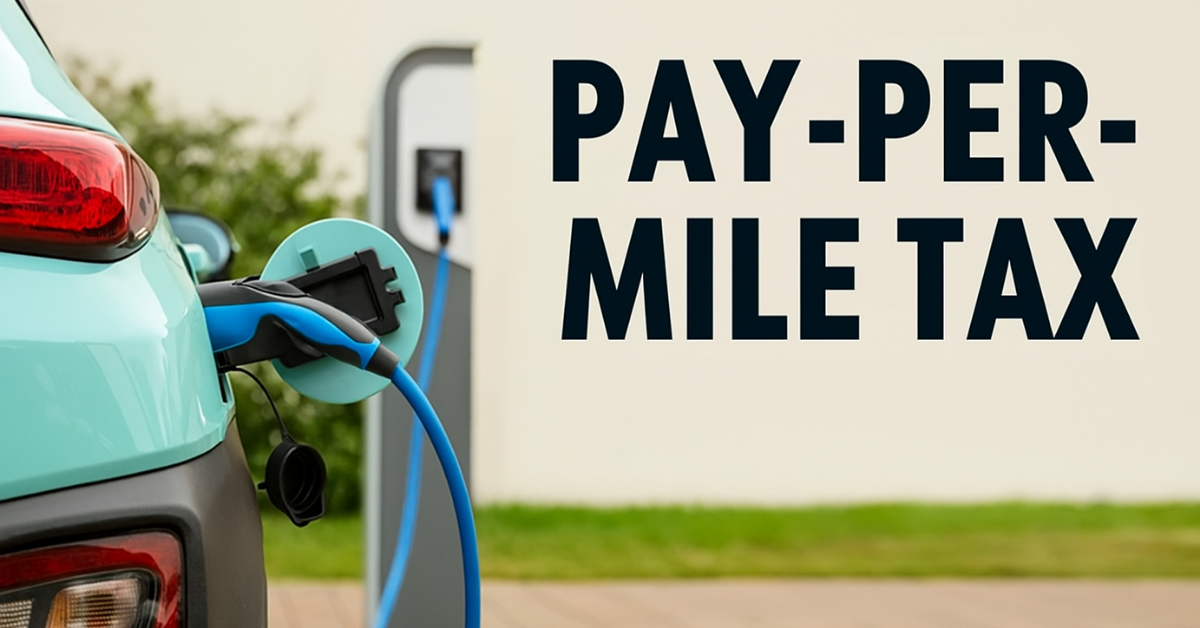
Pay-Per-Mile Tax
Imagine buying an electric car to save money on gas, reduce emissions, and embrace the future of clean transport—only to learn that soon you’ll be taxed for every mile you drive. That’s the reality many electric vehicle owners in the USA are preparing for, as the government has confirmed a pay-per-mile tax system starting in 2028.
This change is stirring conversations nationwide. While it’s designed to fill the gap left by declining fuel tax revenue, it raises questions about affordability, fairness, and the future of EV adoption.

Latest News: Pay-Per-Mile Tax Confirmed
The U.S. government has confirmed that electric vehicle owners will pay a mileage-based tax from April 2028.
- Battery EVs: 3 cents per mile
- Plug-in hybrids: 1.5 cents per mile
- Annual cost estimate: Around $255 for the average EV driver (8,500 miles/year)
- Revenue goal: Raise $1.4–1.9 billion annually to replace lost fuel duty
This tax will be in addition to the $195 annual vehicle excise duty (VED) already applied to EVs.
Why the Pay-Per-Mile Tax Exists
Fuel taxes have historically funded road maintenance. But as EV adoption grows, gasoline tax revenue is shrinking, leaving a $40 billion gap in infrastructure funding.

The pay-per-mile tax ensures that all vehicles contribute fairly to road upkeep, regardless of whether they run on gas or electricity.
Impact on EV Owners
For EV drivers, this policy means:
- Higher annual costs compared to today’s near tax-free driving.
- Reduced incentive to switch to EVs, potentially slowing adoption.
- Fairer contribution to road maintenance, aligning EVs with traditional vehicles.
While some see it as necessary, others argue it could discourage sustainability goals.
Industry and Public Reaction
- Motoring industry groups have criticized the tax as “confusing” and potentially harmful to EV sales.
- Environmental advocates worry it undermines incentives for clean transport.
- Government officials argue it’s about fairness: “All cars contribute to road wear and tear”.
Looking Ahead: What EV Owners Should Know
- The tax begins in 2028, giving drivers time to prepare.
- Rates will increase annually with inflation (CPI).
- EV owners should factor in running costs beyond electricity and insurance.
- Policymakers may introduce rebates or incentives to balance the impact.
Final Thoughts: Balancing Fairness and Sustainability
The pay-per-mile tax for electric vehicle owners in the USA is a landmark policy shift. It reflects the government’s need to maintain infrastructure funding while adapting to a world of zero-emission transport.
For EV owners, it’s a reminder that while clean cars save on fuel, they won’t be exempt from contributing to road costs. The challenge ahead is ensuring this policy doesn’t slow the nation’s transition to sustainable mobility.
Disclaimer
This article is for informational purposes only and does not constitute financial or legal advice. Tax policies may change. Please refer to official U.S. government sources for the latest updates.